 JP
JP
 EN
EN
 VN
VN
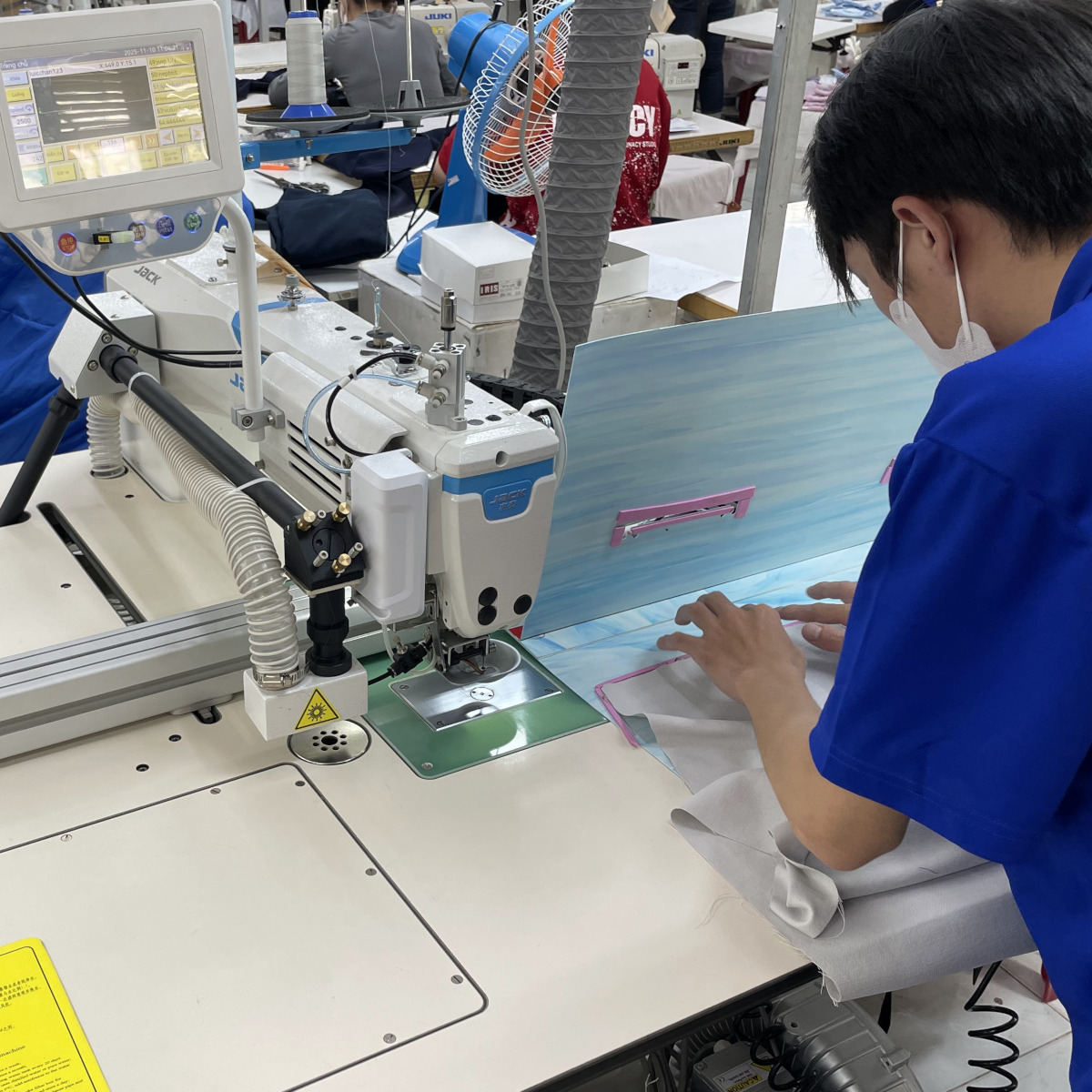
Looking at this machine, some people may assume it allows us to sew something impossible on a standard sewing machine.
In reality, that is not always the case.
The machine shown here is a pattern sewing machine, sometimes called a pattern seamer. It is designed to repeat a predefined sewing pattern with a high level of consistency.
Of course, many operations performed on this machine could also be completed using a standard sewing machine by a skilled operator. In some cases, the final appearance of the garment may even look very similar.
However, garment manufacturing involves more than simply asking whether something can be sewn.
When producing hundreds or thousands of garments, consistency becomes increasingly important. Even a small variation in stitch position or shape can create differences between pieces. What looks acceptable on one garment may become noticeable when many garments are compared side by side.
Specialized equipment can help reduce this variation.
It may also help improve efficiency, reduce operator fatigue, and make certain operations easier to repeat throughout production. These benefits are not always visible in the finished garment, but they can have a significant impact on the manufacturing process itself.
That is why specialized machines are not introduced only when a particular operation is impossible on conventional equipment.
Sometimes they are introduced because they help achieve the same result more consistently.
In garment manufacturing, there are often many ways to complete the same operation. Choosing the right method is not only about what can be done, but also about how reliably the same result can be achieved again and again.
Consistency is often one of the less visible parts of production, but it is one of the reasons why specialized equipment continues to play an important role in modern garment factories.